U.S.A. peak production
One reason for the 1973 oil embargo was Peak oil production in the U.S.A.
Yom Kippur war
October, 6th 1973:
A coalition of Arab nations, led by Egypt and Syria, launched a surprise attack on Israel during Yom-Kippur, the holiest day in Judaism. On the Egyptian front Arab forces advanced virtually unchallenged across the Sinai Peninsula (occupied by Israel since 1967). Israel chose not to counterattack right away. This was so; 1) Israel would not be blamed for the attack, and 2) to get U.S. support. Three days later, Israel mobilized its forces to stop the advance. The Arab countries, now enraged, embargoed U.S.A. (further explained in the next section). On October 25th a U.N. enforced ceasefire stopped the war.
A coalition of Arab nations, led by Egypt and Syria, launched a surprise attack on Israel during Yom-Kippur, the holiest day in Judaism. On the Egyptian front Arab forces advanced virtually unchallenged across the Sinai Peninsula (occupied by Israel since 1967). Israel chose not to counterattack right away. This was so; 1) Israel would not be blamed for the attack, and 2) to get U.S. support. Three days later, Israel mobilized its forces to stop the advance. The Arab countries, now enraged, embargoed U.S.A. (further explained in the next section). On October 25th a U.N. enforced ceasefire stopped the war.
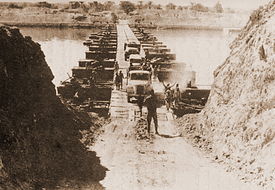
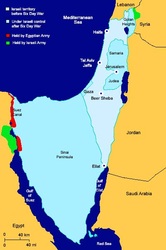
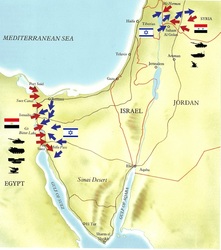
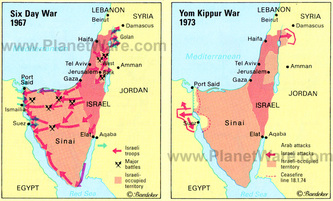
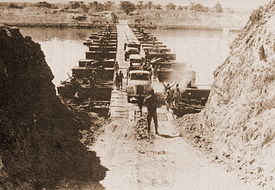 Egyptian tanks crossing the Sinai Peninsula. 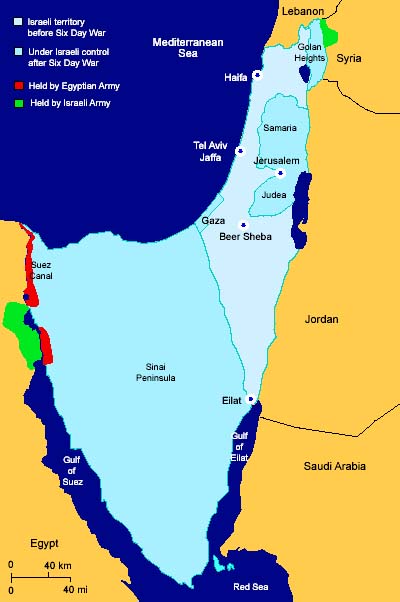 This map shows territories after Yom-Kippur war. Blue/Green was held by the Israeli army and red was held by the Egyptian army. 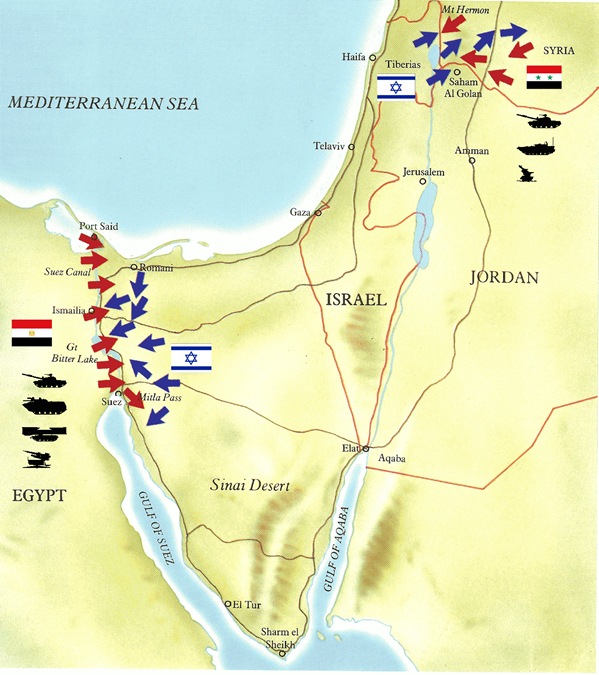 This map shows the war fronts on the Yom-Kippur war. 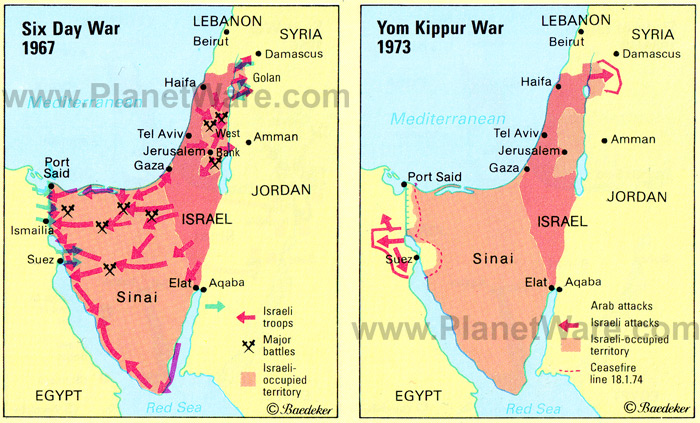 Sinai Peninsula during 1967 6 Day War and during the 1973 Yom-Kippur War.
1 / 4
“And by the way, a piece of news, Israel is the one country in which everyone is pro-American, opposition and coalition alike. And I represent the entire people of Israel who say, 'Thank you, America.'' And we're friends of America, and we're the only reliable allies of America in the Middle East.” 1973 Oil EmbargoOPEC did the 1973 oil embargo in response to the U.S. supporting Israel instead of Arab nations in the Yom-Kippur War. King Faisal of Saudi Arabia also asked that an embargo be imposed upon the United States. The price of oil quadrupled from $3 [$15.69] in today's money] per barrel to $12 [$62.75 in today's money] per barrel, and oil production was stopped 5% each month. This led to supply rationing and other issues in the United States. It also created a rift between the developed nations, as nations such as Japan tried to distance themselves from U.S. politics to reduce the effects of the embargo. OPEC continued to embargo on the U.S. as well as its allies in Europe and Asia. OPEC production cuts continued, sparking a worldwide recession amongst developed countries. Inflation and unemployment rose to record levels. The automobile industry tanked as less people bought cars in response to skyrocketing oil prices. Israel finally agreed to pull troops out of the Sinai Peninsula, ending the Yom Kippur War.
|


 Previous page | Next page |